Leave Your Message

What Is a Textile Processing Machine?

A Textile Processing Machine is industrial equipment used to prepare, transform, treat, or finish textile materials. It works with fibers, yarns, woven fabrics, knitted fabrics, and sometimes nonwoven materials. These machines support processes such as spinning, weaving, dyeing, printing, drying, coating, and finishing. Each stage can change the fabric’s strength, color, texture, width, or performance.

In a working textile mill, the equipment may guide fabric through heated rollers, chemical baths, tension controls, and drying chambers. Sensors monitor speed, temperature, moisture, and fabric alignment. Operators still inspect the material by sight and touch. A small crease near a roller can become a long production defect. Practical experience remains important, even in highly automated factories.

The exact meaning of Textile Processing Machine depends on the production stage. A dyeing machine is not designed for the same task as a fabric inspection machine. Reliable selection requires attention to material type, production volume, energy use, maintenance access, and safety controls. Manufacturers should also provide technical documentation and measurable performance data.

The definition is not always simple. Some machines perform several operations in one production line, while others handle one precise function. A technically advanced machine may still create waste if settings are poorly controlled. This article explains the main machine categories, their working principles, and their roles in modern textile production. It also considers practical limitations, because real factory conditions rarely match perfect specifications.

What Is a Textile Processing Machine?

Definition and Purpose of a Textile Processing Machine

What Is a Textile Processing Machine?

Definition and Purpose of a Textile Processing Machine

A textile processing machine is equipment used to prepare, treat, shape, or finish textile materials. It handles fibers, yarns, knitted fabrics, and woven fabrics. Common processes include washing, drying, dyeing, coating, stretching, and heat setting. The machine’s purpose is practical: it improves fabric quality, appearance, strength, and consistency. The goal is control.

In production, operators adjust temperature, fabric speed, chemical flow, moisture, and tension. These settings affect the final hand feel and dimensional stability. For example, uneven tension may create wrinkles along a fabric roll. Excessive heat can weaken delicate fibers or change their color. Experienced technicians inspect fabric during processing, not only after it leaves the machine. This helps identify problems before many meters are affected. Small errors spread. I have found that maintenance records are useful, but they never replace direct observation. A clean sensor can still give an inaccurate reading.

Tips: Check rollers, filters, heating areas, and tension controls before operation. Use a small trial batch when changing settings. Record temperature, speed, and moisture levels for repeatable results. Train operators to notice unusual vibration, noise, or fabric marks. Safety guards and emergency controls should remain functional at all times. A rushed adjustment may save minutes, but it can create hours of rework.

Main Types of Textile Processing Machines

What Is a Textile Processing Machine?

Main Types of Textile Processing Machines

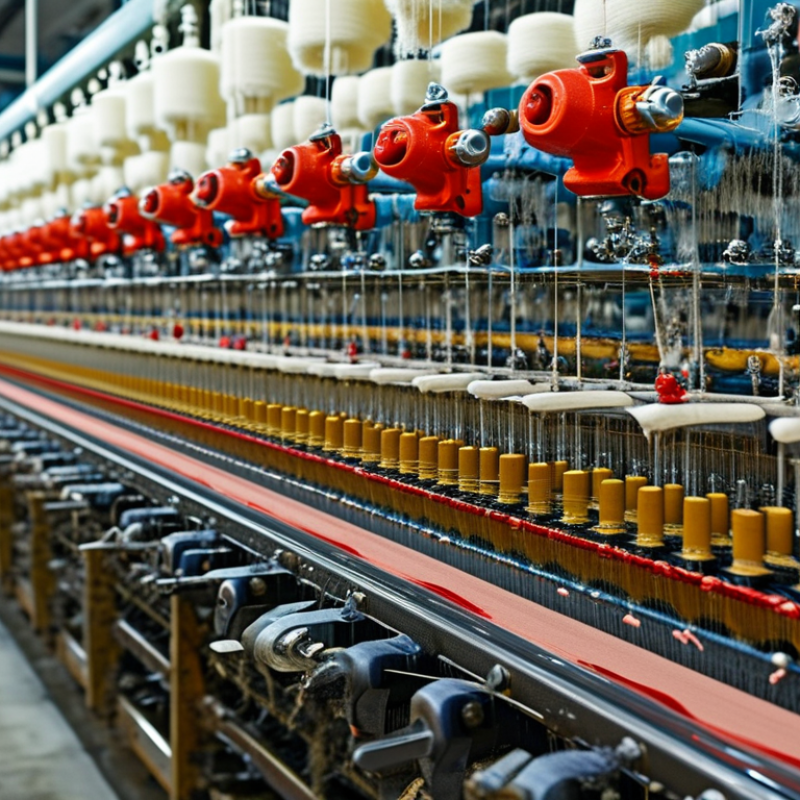
Textile processing machines convert loose fibers into usable yarn, fabric, and finished goods. Each machine controls a different stage. The process may begin with opening and blending machines. They loosen compressed fibers and create a more even mixture. Carding machines then separate fibers and form a soft web. This stage strongly affects yarn quality.

Drawing machines align fibers and reduce unevenness. Spinning machines twist the prepared strand into yarn. Different spinning systems create different textures, strengths, and production speeds. Weaving machines interlace yarns at right angles. Knitting machines form connected loops, producing stretchable fabrics. A small tension change can create visible fabric defects.

Dyeing machines add color under controlled temperatures and chemical conditions. Washing and finishing machines improve softness, shrinkage control, water resistance, or surface appearance. Inspection machines use cameras, lighting, or manual checks to find holes, stains, and broken yarns. In a working mill, operators monitor pressure, speed, moisture, and fabric width. Numbers matter.

A practical mistake is choosing equipment only by output capacity. Maintenance access, energy use, and operator training also affect reliable production. Even advanced machines cannot correct poorly prepared fibers. Settings may need adjustment during humid weather or with recycled materials. That part is easy to underestimate. Regular testing remains essential.

What Is a Textile Processing Machine? — Main Types of Textile Processing Machines

Textile processing machines convert raw fibers or unfinished fabric into usable textile products through preparation, chemical treatment, coloration, drying, and finishing. The chart shows representative operating speeds for common continuous fabric-processing machines; actual speeds vary by fiber, fabric construction, process recipe, and fabric weight.

How to read the chart: Preparation machines such as singeing and desizing commonly operate at moderate-to-high fabric speeds, while dyeing and finishing speeds are adjusted more carefully to ensure even treatment, drying, dimensional stability, and surface quality.

Key Stages in Textile Processing

What Is a Textile Processing Machine?

Key Stages in Textile Processing

A textile processing machine converts loose fibers or unfinished fabric into a usable textile. Its role changes with each production stage. On a production floor, operators check fiber tension, moisture, temperature, and surface condition. Small changes can affect the final fabric.

Fiber Preparation and Spinning

Fiber preparation usually begins with opening and blending equipment. These machines loosen compressed fibers and distribute different fibers evenly. Carding machines then separate fibers and form a more regular web. Drawing equipment straightens the fibers and improves thickness control. In spinning, drafting systems reduce the fiber bundle before twist creates yarn. The yarn may then pass through winding equipment, which removes weak sections and forms stable packages.

Fabric Preparation and Finishing

Fabric processing starts with preparation. Washing machines remove oils, dirt, and sizing materials from woven or knitted fabric. Scouring and bleaching improve absorbency and appearance. Dyeing machines apply color through controlled liquor flow, heat, and time. Uneven temperature can create visible shade differences. Drying equipment removes moisture without over-stressing the fabric. Finishing machines may soften, compact, brush, coat, or stabilize the material. These treatments influence handle, width, shrinkage, and durability.

Real production is rarely perfect. A machine setting that works for cotton may fail with a synthetic blend. Operators often adjust speed after inspecting fabric under direct light. Testing remains essential, even when the surface looks acceptable. Tension marks can appear later. That is easy to overlook.

How Textile Processing Machines Operate

Textile processing machines turn unfinished fabric into material with controlled color, texture, width, or performance. Their work begins at the feed roll. Operators guide fabric through rollers, baths, chambers, and winding units. Each section performs one clear task. The machine may wash fibers, apply dye, remove moisture, heat fabric, or press it flat. A stable path matters because one small wrinkle can spread across many meters.

Operation depends on measured tension and timed movement. Motors pull the fabric at a selected speed, while sensors monitor edge position, temperature, moisture, and pressure. A control system adjusts rollers when readings drift. In a coating line, a blade spreads liquid across the surface. Heated air then removes moisture without scorching the cloth. Technicians check the first meters by touch and sight. They look for streaks, uneven shade, rough edges, and unwanted shrinkage.

Real production is less perfect than a screen suggests. Dust can affect sensors. Wet fabric can stretch unexpectedly. A setting that works for cotton may fail on blended material. Skilled operators record these changes and adjust gradually, not blindly. I would not trust an automatic alarm alone. Calibration, cleaning, and sample testing still protect consistency. Even experienced teams sometimes miss a minor defect during a fast run, so reviewing fabric samples remains necessary.

Industrial Uses and Selection Factors

What Is a Textile Processing Machine?
Industrial Uses and Selection Factors

A textile processing machine changes yarn, fabric, or finished material through controlled mechanical, thermal, or chemical actions. Typical equipment includes looms, knitting machines, dyeing units, dryers, coating lines, and finishing systems. Each machine targets a specific production stage. A dyeing unit may circulate fabric through heated liquor, while a stenter controls width and fabric tension. Small setting errors can create visible shade variation, edge curling, or uneven shrinkage.

Industrial selection should begin with the material and process, not the machine’s advertised speed. Review fiber type, fabric weight, width, moisture tolerance, and required output. Then examine temperature stability, tension control, energy consumption, cleaning access, and operator safety. A machine for delicate filament fabric needs gentler handling than equipment for heavy workwear. Factory trials are valuable. Test before purchase. They reveal problems that brochures often hide.

Measure real production conditions. Check available floor space, utilities, ventilation, maintenance skills, and spare-part access. Digital controls can improve repeatability, but they cannot correct poor recipes or careless loading. Efficient equipment may still underperform when operators receive limited training. That failure is easy to underestimate. Buyers should request sample testing, performance records, calibration procedures, and clear service terms. Noise, heat, and wastewater handling also deserve attention. A lower purchase price may become expensive when downtime, rework, or difficult cleaning enters the calculation.

What Is a Textile Processing Machine? - Industrial Uses and Selection Factors

Machine Category Primary Processing Stage Main Industrial Function Typical Materials Common Output or Performance Range Typical Industrial Uses Important Selection Factors
Fiber Opening and Blending Machine Preparation before carding Opens compressed fiber bales, removes a portion of foreign matter, and blends fibers into a more uniform feed. Cotton Recycled fibers Synthetic staple fibers Processing capacity commonly ranges from several hundred kilograms to more than 1,000 kilograms per hour, depending on the line configuration and fiber type. Spinning mills, nonwoven production, recycled-fiber preparation, and blended-yarn manufacturing. Fiber length, trash content, blend accuracy, dust-control design, feeding consistency, floor space, and energy consumption.
Carding Machine Fiber individualization and web formation Separates, aligns, and partially cleans fibers to produce a continuous sliver or web. Cotton Wool Viscose Polyester staple fiber Modern industrial cards may operate at several tens of kilograms per hour, with actual output determined by fiber fineness, product quality, and machine settings. Short-staple spinning, woolen and worsted preparation, nonwoven lines, and specialty fiber processing. Carding width, cylinder speed, fiber damage, nep removal, sliver evenness, maintenance access, and compatibility with the next process.
Drawing Frame Sliver equalization and fiber alignment Combines several slivers and drafts them to improve evenness and parallelization before further spinning. Cotton sliver Blended sliver Synthetic staple-fiber sliver Typical delivery speeds range from several hundred to above 1,000 meters per minute, depending on the process and product requirements. Ring-spinning preparation, compact-spinning preparation, and high-quality yarn production. Drafting precision, autoleveller response, sliver count range, delivery speed, sensor reliability, and ease of cleaning.
Spinning Machine Yarn formation Converts prepared fibers into yarn by applying draft and twist or by using an air-jet, rotor, or other spinning method. Natural fibers Man-made staple fibers Fiber blends Production speed varies substantially by technology: rotor and air-jet systems generally operate at higher delivery speeds than conventional ring spinning. Apparel yarns, home textiles, technical fabrics, sewing threads, and industrial yarns. Yarn count range, twist requirements, strength and hairiness targets, production speed, automation level, waste rate, and yarn package format.
Winding Machine Yarn package preparation Rewinds yarn onto a suitable package while removing selected defects and controlling tension. Spun yarn Filament yarn Sewing thread Industrial winding speeds commonly range from several hundred to more than 2,000 meters per minute, depending on yarn type and package design. Weaving preparation, knitting preparation, dyeing packages, sewing-thread production, and fault-cleared yarn manufacture. Yarn tension control, clearer settings, package size, splicing quality, changeover time, dust management, and automation.
Warping Machine Warp preparation Arranges yarns in a controlled parallel sheet and winds them onto a beam for weaving or other downstream processes. Cotton yarn Polyester filament Blended yarn Working speeds and beam widths vary by machine design; precision tension control is essential for stable weaving performance. Apparel fabrics, technical fabrics, upholstery, denim, and high-density woven materials. Number of ends, yarn tension uniformity, beam width, pattern requirements, creel capacity, break detection, and floor layout.
Sizing Machine Warp yarn reinforcement Applies a controlled size film to warp yarns to reduce abrasion and improve weaving efficiency. Cotton Viscose Blended yarn Filament yarn Line speeds commonly range from several tens to more than 100 meters per minute, depending on yarn, size formulation, and drying capacity. High-speed weaving, dense fabrics, denim, workwear, and technical textile production. Size-add-on control, drying efficiency, moisture recovery, yarn flexibility, wastewater considerations, and compatibility with desizing.
Loom Fabric formation Interlaces warp and weft yarns to produce woven fabric. Cotton Polyester Wool Technical yarns Insertion rates vary by loom type and fabric construction; air-jet and rapier systems are widely used for industrial woven production. Clothing, bed linens, upholstery, canvas, automotive fabrics, filters, and protective textiles. Fabric width, weft insertion method, yarn count, fabric density, pattern complexity, noise level, compressed-air demand, and fabric quality.
Knitting Machine Fabric formation Forms fabric by interlooping yarns, producing either weft-knitted or warp-knitted structures. Cotton Wool Polyester Nylon Elastane blends Production depends on machine diameter, gauge, number of feeders, fabric structure, and yarn characteristics rather than a single universal speed. Sportswear, underwear, hosiery, seamless garments, upholstery, mesh, and stretch fabrics. Machine gauge, diameter, feeder count, stitch range, fabric weight, pattern capability, yarn tension, and required stretch properties.
Dyeing Machine Coloration Applies dyes to fibers, yarns, or fabric under controlled temperature, pH, time, liquor ratio, and chemical conditions. Fiber Yarn Woven fabric Knitted fabric Batch capacity may range from small laboratory or sampling loads to several hundred kilograms or more for production equipment. Apparel, household textiles, yarn dyeing, carpet production, and technical textile coloration. Material form, dye class, batch size, liquor ratio, temperature control, shade reproducibility, water use, wastewater treatment, and loading method.
Finishing Machine Fabric enhancement Improves appearance, handle, dimensional stability, performance, or functional properties after dyeing or printing. Woven fabrics Knitted fabrics Nonwovens Technical textiles Continuous finishing lines are commonly specified by fabric width, line speed, drying capacity, and the required chemical or mechanical treatment. Softening, shrink control, water repellency, flame resistance, coating preparation, heat setting, and surface enhancement. Required finish, fabric width, temperature range, dwell time, chemical compatibility, exhaust treatment, energy recovery, and process repeatability.
Inspection and Rolling Machine Quality control and final preparation Inspects fabric for defects, measures length, controls fabric tension, and prepares rolls for storage or shipment. Woven fabric Knitted fabric Coated fabric Inspection speed is selected according to fabric construction, defect sensitivity, lighting conditions, and operator or vision-system capability. Garment manufacturing, fabric trading, dyeing and finishing plants, automotive textiles, and technical fabric converting. Inspection width, lighting quality, defect detection method, roll diameter, fabric tension, length measurement accuracy, and data traceability.