Top 10 Automatic Textile Machines for Global Buyers?
The textile industry is rapidly evolving, with an increasing demand for efficiency and automation. The Automatic Textile Machine is at the forefront of this transformation. It enhances production speed while improving quality. Buyers worldwide seek the best machines to streamline their operations.
In this article, we explore the top 10 Automatic Textile Machines. Each machine offers unique features tailored to various textile needs. Understanding their specifications can help buyers make informed choices. However, not every machine suits every operation. Different manufacturing environments require different solutions.
Investing in an Automatic Textile Machine requires careful evaluation. While some machines excel in speed, others may prioritize quality. It's essential to weigh these factors against specific production goals. Our analysis aims to provide insight into the options available. As you consider these machines, reflect on your own operational needs and capacity for investment.

Overview of Automatic Textile Machines in the Global Market
The global market for automatic textile machines has seen significant growth. According to a report by Grand View Research, the automatic textile machinery market is projected to reach $4.1 billion by 2025. This surge is fueled by the increasing demand for advanced textile production techniques. Companies seek efficiency and productivity, leading to greater investment in automation.
Automatic textile machines offer benefits that enhance production quality. Technologies like computer-controlled looms and automated sewing machines reduce human error. This shift not only improves speed but also consistency in fabric manufacturing. However, the reliance on automation raises questions. How do we balance technology and skilled labor? As industries innovate, the need for specialized training becomes crucial.
Data from Statista shows that Europe and Asia dominate the textile machinery market. However, developing regions are catching up quickly. Emerging markets are investing in these technologies to boost their textile industries. These investments promise growth but may also lead to increased competition. The transition to automation is not without challenges. Balancing technology with human expertise requires ongoing assessment and adjustments.
Top 10 Automatic Textile Machines in the Global Market
Key Features to Consider When Choosing Textile Machines
When choosing automatic textile machines, it’s essential to evaluate their key features carefully. Start by considering the machine's efficiency. High efficiency leads to increased production without sacrificing quality. Look for features like
automatic threading and
self-cleaning systems, which save time and boost productivity.
Another important factor is the machine's adaptability. Textile production often requires flexibility to handle various fabric types. Machines that can easily switch between materials provide an edge in meeting diverse demands. Choose machines with user-friendly interfaces for seamless operation.
Tips: Always check the warranty and support offered. A good warranty can protect your investment. Also, read user reviews to gauge real-world performance. Machine maintenance is crucial; easy access to parts can reduce downtime significantly. Make sure to consider these aspects. The right choice can elevate your textile production to new heights.
Top Automatic Textile Machines: Performance and Efficiency
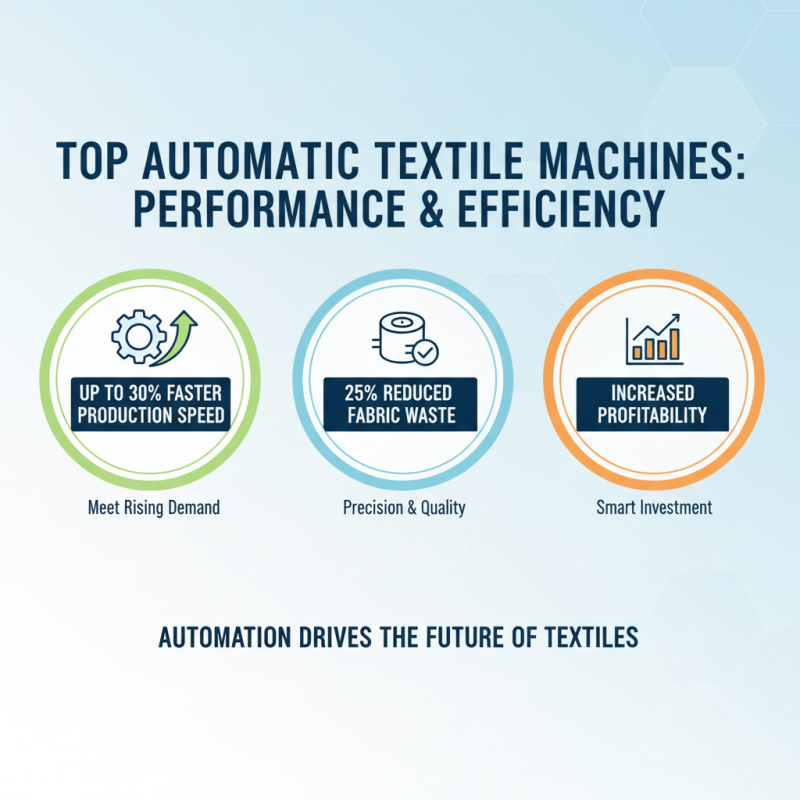
The modern textile industry is driven by automatic machines that ensure high performance and efficiency. According to a recent industry report, automated machines can improve production speed by up to 30%. This increase allows manufacturers to meet rising demand without compromising quality. Precision is crucial, as automated systems often reduce fabric waste by 25% compared to manual processes. These statistics highlight the importance of investing in advanced technology.
Efficiency in automatic textile machines is not solely about speed. Energy consumption is a major concern. Studies indicate that newer models consume 20% less energy than older versions. This eco-friendly shift benefits manufacturers and addresses environmental issues. However, some producers still struggle with initial investment costs. The technology can be costly, and many find it challenging to balance price and efficiency.
Despite significant advancements, the textile industry faces ongoing challenges. Maintenance of automatic machines requires skilled personnel, which can be hard to find. Moreover, some businesses report that integrating new machines into existing workflows is difficult. Ongoing training is necessary, but training programs may not be readily available. Each hurdle encourages companies to reassess their strategies and invest in continuous learning for staff development.
Leading Brands in Automatic Textile Machinery Industry
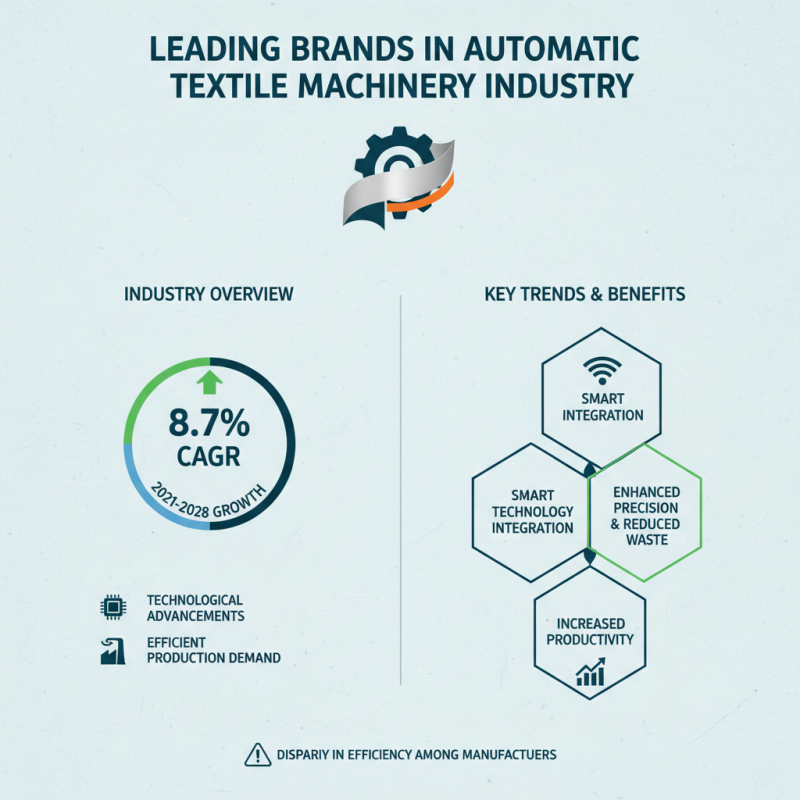
The automatic textile machinery industry is experiencing significant growth. Recent reports estimate a CAGR of 8.7% from 2021 to 2028. This surge is driven by advancements in technology and the increasing demand for efficient production processes. Industry leaders are focusing on integrating smart technology into their products. Automation enhances precision, reduces waste, and increases productivity. However, not all manufacturers keep pace with these changes, leading to disparities in efficiency.
Leading brands in this sector prioritize innovation. They invest considerably in research and development. Reports indicate that over 35% of industry revenues are allocated to improving machinery capabilities. Despite these efforts, some brands still struggle with quality control. The interconnection of machinery can lead to vulnerabilities. Consequently, some businesses experience downtime due to machine malfunctions.
Sustainability is another critical factor. A recent study highlights that nearly 60% of textile production is now influenced by eco-friendly practices. Companies are adopting sustainable materials and processes. Yet, not all automatic machines are optimized for these changes. As a result, certain brands lag in their environmental initiatives. The shift towards sustainability presents both challenges and opportunities for all manufacturers.
Future Trends in Automatic Textile Machinery Development
The textile industry is evolving at a rapid pace, driven by automation and advanced technology. Future trends will focus on integrating artificial intelligence and machine learning into textile machinery. This automation will enhance production efficiency, reduce errors, and improve quality control. Smart machines will collect data, allowing manufacturers to predict equipment maintenance needs and enhance workflow.
Innovations in automatic textile machines aim to reduce labor costs while improving precision. For example, automated weaving and knitting machines are becoming more sophisticated. They can adapt to different fabric types and designs with minimal human intervention. However, reliance on automation can lead to challenges, such as job displacement and the need for advanced technical skills among workers.
Looking ahead, sustainability will play a crucial role in textile machinery development. Automatic machines will need to minimize waste and energy consumption. Manufacturers should consider eco-friendly materials and processes. This shift is essential for aligning with global environmental goals. Balancing automation benefits with these challenges will require thoughtful planning and innovation in the industry.
Top 10 Automatic Textile Machines for Global Buyers - Future Trends in Automatic Textile Machinery Development
| Machine Type |
Applications |
Automation Level |
Efficiency (%) |
Future Trends |
| Automatic Spinning Machine |
Cotton, Polyester |
Fully Automated |
95 |
Smart Monitoring |
| Automatic Weaving Machine |
Textile, Fabrics |
Semi-Automated |
90 |
Integration with AI |
| Automatic Knitting Machine |
Socks, Sweaters |
Fully Automated |
92 |
Sustainability Focus |
| Automatic Dyeing Machine |
Yarns, Fabrics |
Fully Automated |
88 |
Environmentally Friendly Chemicals |
| Automatic Finishing Machine |
Textiles |
Semi-Automated |
87 |
Advanced Control Systems |
| Automatic Cutting Machine |
Fabric |
Fully Automated |
91 |
Precision Technology |
| Automatic Printing Machine |
Textile Designs |
Semi-Automated |
89 |
Digital Innovations |
| Automatic Quilting Machine |
Quilts |
Fully Automated |
94 |
Flexible Manufacturing |
| Automatic Embroidery Machine |
Logos, Patches |
Fully Automated |
93 |
Customization Options |
| Automatic Folding Machine |
Fabrics, Clothes |
Fully Automated |
86 |
Space Optimization |