Leave Your Message
Global buyers are looking beyond factory-scale equipment. They want compact, practical, and adaptable tools for small workshops, training centers, laboratories, and emerging textile businesses. A Mini Textile Machine can support spinning, weaving, knitting, embroidery, or fabric testing without demanding a large production floor. Its smaller footprint is attractive. Its limitations matter just as much.
Dr. Seshadri Ramkumar, a textile materials scientist and professor at Texas Tech University, has stated, “Textile innovation must connect science with practical industry needs.” That idea provides a useful starting point for comparing machines across markets. Buyers should examine output quality, motor performance, maintenance access, safety features, spare-part availability, and operator training. A machine that looks affordable may become expensive when repairs require overseas shipping. A low-power model may suit a school but fail in a commercial workshop.
The best choice is rarely the most advanced machine. It is the model that matches the user’s material, workflow, budget, and technical ability. Cotton behaves differently from wool, recycled fiber, or blended yarn. This detail is easy to overlook. Voltage compatibility also deserves attention, especially for international orders. Product specifications can appear clear, yet practical results may vary. Buyers should request demonstrations, sample outputs, warranty terms, and realistic production data before purchasing. This guide reviews leading Mini Textile Machine options for global buyers, while acknowledging an uncomfortable truth: no single machine fits every market.
Mini Textile Machines: Definition, Scope, and Key Advantages
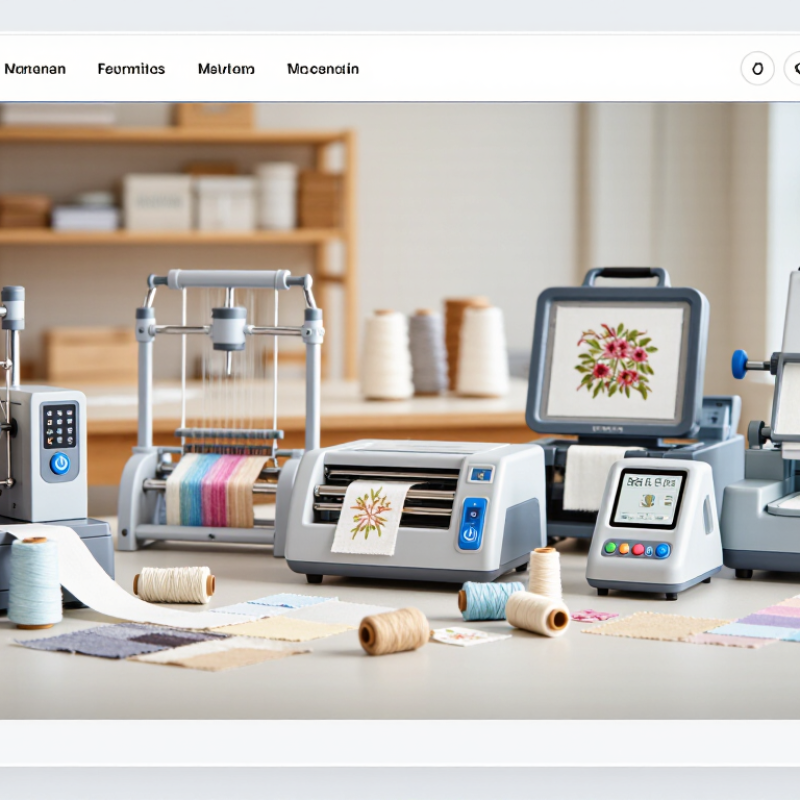
Mini textile machines are compact systems for spinning, weaving, knitting, dyeing, finishing, or fabric testing. They serve training centers, laboratories, design studios, and small production rooms. Their smaller frames fit beside a workbench, while modular parts support quick process changes. The scope is wider than hobby equipment. Some units can produce yarn samples, narrow fabrics, knitted panels, or controlled color batches. In pilot rooms, operators often use them to test fiber blends before larger production. This can reduce material loss and reveal technical problems earlier. However, compact equipment does not guarantee higher efficiency. Output, maintenance, and operator skill still matter.
The International Textile Machinery Federation reported about 8.6 million new short-staple spindles shipped globally in 2023. This figure shows continuing investment in textile capacity, but it does not measure mini-machine demand directly. Grand View Research estimated the global textile machinery market at approximately 28 billion US dollars in 2023. Mini systems occupy a smaller niche within this market. Their key advantages include lower space requirements, reduced trial quantities, easier training, and flexible sampling. They also help buyers compare fibers, yarn counts, and fabric structures with less financial exposure.
Tips: Check working width, motor power, spare-part access, and sample capacity before purchase. Request test results using your actual fiber. A low purchase price can become expensive when calibration is difficult. Review energy use per kilogram, not only the machine’s rated wattage. Surface-level comparisons often miss the real operating cost.
The following comparison uses typical specifications for compact textile equipment. Actual capacity, power consumption, dimensions, and output may vary according to machine configuration, yarn or fabric type, automation level, and operating conditions.
| Machine Type | Primary Function | Suitable Materials | Typical Working Capacity | Typical Power Range | Space Requirement | Key Advantages | Best Fit for Global Buyers |
|---|---|---|---|---|---|---|---|
| Mini Spinning Machine | Converts prepared fibers or slivers into yarn. | Cotton Wool Flax Blended fibers | Approximately 0.2–2 kg of yarn per hour, depending on fiber preparation and yarn count. | About 0.25–1.5 kW | Usually suitable for a compact workshop, laboratory, or training room. | Low material waste, simple sampling, and convenient yarn development. | Small producers, educational institutions, artisans, and product-development teams. |
| Portable Handloom or Mini Power Loom | Interlaces warp and weft yarns to produce woven fabric. | Cotton yarn Wool yarn Linen yarn Synthetic yarn | Common fabric widths range from approximately 30–100 cm; output depends strongly on weave design and operator skill. | Manual or about 0.1–0.75 kW for compact powered models | Typically requires a small workbench or floor area. | Flexible sampling, easy design changes, and relatively low installation requirements. | Craft businesses, design studios, vocational schools, and customized textile workshops. |
| Mini Circular Knitting Machine | Produces tubular knitted fabric through continuous circular knitting. | Cotton Polyester Nylon Spandex blends | Typical cylinder diameters are about 3–12 inches for small-format units; output varies with gauge, speed, and yarn. | About 0.2–1.5 kW | Compact floor or tabletop installation, depending on cylinder size. | Efficient production of narrow tubes, cuffs, socks, bands, and small knitted components. | Accessory makers, sampling departments, repair workshops, and niche apparel producers. |
| Mini Flat Knitting Machine | Creates flat knitted panels and shaped components. | Wool Acrylic Cotton Blended yarns | Typical needle beds are approximately 30–100 cm wide; production speed depends on stitch complexity and yarn weight. | Manual, semi-automatic, or about 0.2–1.2 kW | Usually suitable for a table or compact production station. | Supports shaped panels, small garments, samples, and frequent design changes. | Fashion schools, prototype rooms, small apparel workshops, and custom knitwear businesses. |
| Compact Embroidery Machine | Adds decorative or functional stitched patterns to textile surfaces. | Cotton fabric Polyester fabric Denim Canvas | Typical embroidery fields range from approximately 100 × 100 mm to 400 × 400 mm; speed is design-dependent. | About 0.1–0.6 kW | Tabletop or compact stand-mounted setup. | High design flexibility, digital pattern storage, and strong value for customized products. | Personalization businesses, apparel decorators, promotional-product workshops, and sample rooms. |
| Mini Fabric Cutting Machine | Cuts fabric layers into panels, shapes, or sample pieces. | Woven fabric Knitted fabric Nonwoven fabric Leather-like textiles | Cutting depth commonly ranges from single-layer cutting to several centimeters, depending on the blade and material. | About 0.1–1.0 kW | Compact table or small cutting-table installation. | Improves cutting consistency and reduces manual cutting time for samples and small batches. | Tailoring shops, sample makers, upholstery workshops, and small garment manufacturers. |
| Mini Fabric Printing Machine | Applies graphics, patterns, or color designs to textile surfaces. | Cotton Polyester Blended fabric Canvas | Common printable widths range from approximately 300–1,200 mm, depending on the printing method. | About 0.3–2.0 kW, excluding separate curing or drying equipment | Tabletop or compact workstation; ventilation may be required for some inks. | Short-run customization, quick design changes, and reduced setup for small orders. | Online sellers, local decorators, fashion studios, and customized home-textile businesses. |
| Mini Heat Press | Transfers printed graphics, films, labels, or heat-sensitive materials onto textiles. | Cotton Polyester Blended fabrics | Typical platen sizes range from approximately 150 × 200 mm to 400 × 500 mm. | About 0.6–2.0 kW | Tabletop installation with a stable, heat-resistant work surface. | Simple operation, fast job changeover, and relatively low entry cost. | Start-up businesses, event merchandise suppliers, schools, and small customization studios. |
| Mini Sewing Machine | Joins fabric pieces through lockstitch, chain stitch, or other basic sewing operations. | Woven fabrics Knits Light upholstery fabrics | Typical sewing speeds range from approximately 500–3,000 stitches per minute, depending on the machine type. | About 0.1–0.8 kW | Tabletop or portable workstation. | Useful for sampling, repairs, alterations, and small-batch assembly. | Tailors, repair shops, fashion students, home-based producers, and mobile workshops. |
| Selection guidance: Global buyers should verify electrical frequency and voltage, plug configuration, safety certification, spare-parts availability, operator training, language support, shipping dimensions, and after-sales service before purchase. Output figures should be confirmed with the equipment supplier using the intended fiber, yarn count, fabric weight, and production process. | |||||||